A static analysis first approach to RFCs
March 8th 2026 software design static analysis open source
One of the great things about PHP is the language is evolving. Every November we're blessed with an update to PHP packed full of exciting new features.
The language evolves via the RFC process. Some features (e.g. attributes) took several attempts and many years before they become part of the language.
The RFC process is long and thorough for good reason. Once a feature has been added to the language, it'll be around for years. Get it wrong and developers have to live with the consequences.
As illustrated in other articles in this series some language features, e.g. friend and namespace visibility can be emulated with static analysis.
There are many benefits of using static analysis to try out new language features:
- It's quick; once you know your way around writing custom PHPStan rules, you can create language features like these in a few hours.
- It's possible to get feedback from real codebases and make tweaks as required.
- Ideas can be extensively tested before adding to the language.
- The benefits of the ideas can be demonstrated.
- By the time it is finally added, they'll be higher confidence the best implementation has been created.
Proposing an RFC that has been extensively tested via emulation in static analysis would hopefully have a greater change of being implemented.
Should RFC ideas be mandated to start off in static analysis world?
For the reasons above, I think non-trivial language features that can be emulated with static analysis, should be emulated in static analysis, before becoming part of the language. Those who want the feature can get it via static analysis. When it is finally released, everyone will benefit for the best possible implementation.
From static analysis to the PHP language
There are ready examples of features that started off in static analysis world have moved to PHP. E.g. the never type.
A couple of ideas from the PHP Language Extension Library have also made it to PHP.
The #[Override] attribute, which in now in PHP.
The #[MustUseResult] is similar to PHP 8.5's #[NoDiscard] attribute.
NOTE: I am not, for one minute, claiming any credit for these attributes making their way to PHP. Both my library and the relevant RFC authors were using good ideas from other languages.
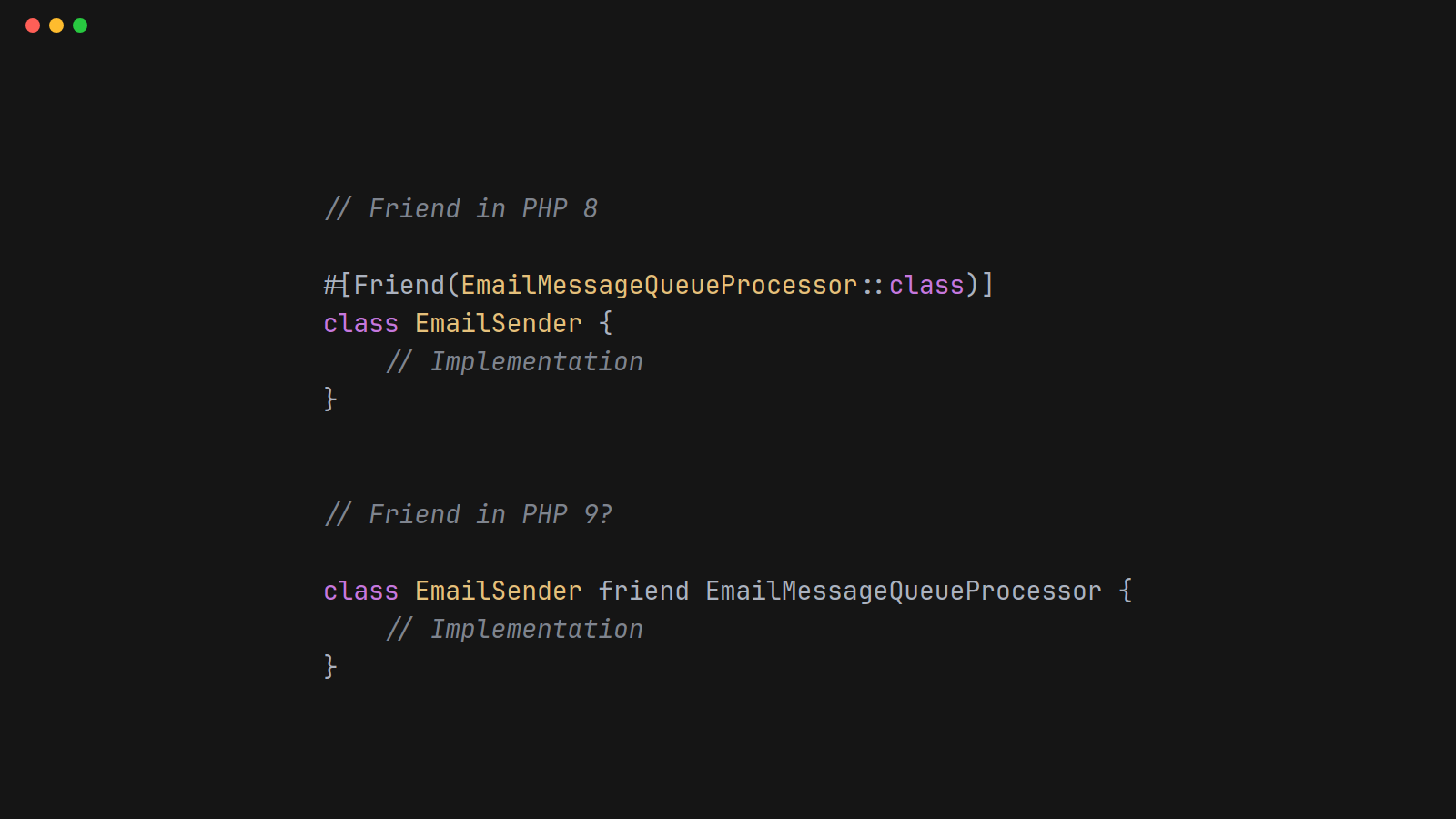
It is conceivable that one day concepts like #[Friend] might make it to PHP.
Friend today:
#[Friend(EmailMessageQueueProcessor::class)]
class EmailSender {
    // Implementation
}
Friend in PHP 9?
class EmailSender friend EmailMessageQueueProcessor {
    // Implementation
}
Other articles in this series
- Introducing the PHP Language Extensions Library
- Introducing the Friend attribute (example 1)
- Introducing the MustUseResult attribute
- Introducing the NamespaceVisibility attribute
- Introducing the TestTag attribute
- Introducing the RestrictTraitTo attribute
- Introducing the InjectableVersion attribute
- A static analysis first approach to RFCs